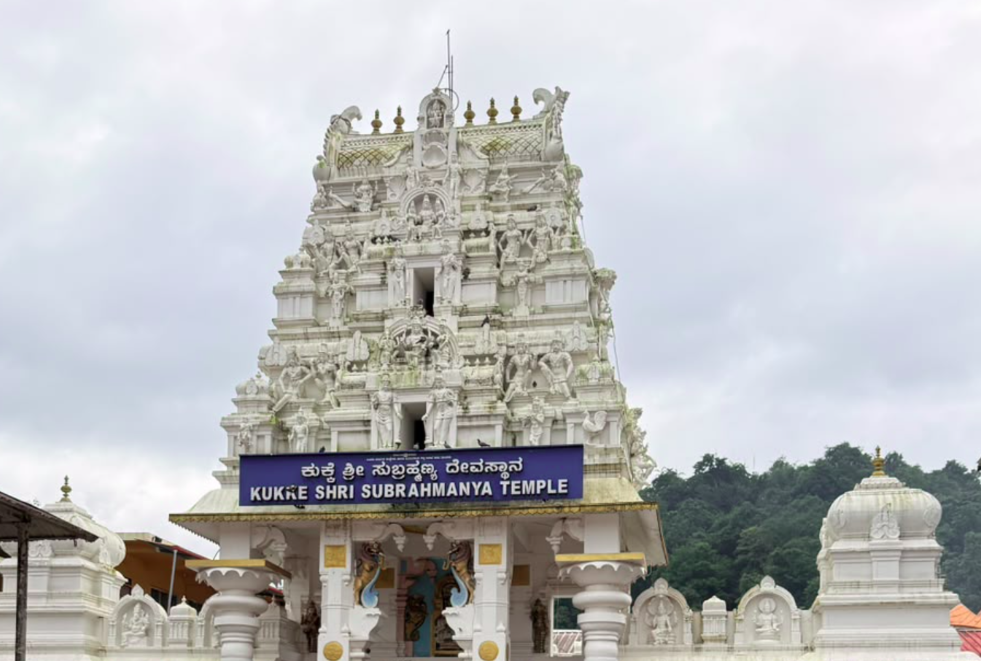
Tucked between forested hills on the banks of the Kumaradhara river in Karnataka’s Dakshina Kannada district, Kukke Subramanya is one of South India’s most revered — and most talked-about — Hindu pilgrimage sites. It’s the temple people travel to specifically for Sarpa Dosha and Naga Dosha remedies, and it sits at the base of one of Karnataka’s toughest treks, Kumara Parvatha. Here’s the full picture: the mythology behind the temple, what makes it unique, and exactly how to get there from Vijayawada, Bangalore, and Chennai.
About Kukke Subramanya Temple
Kukke Subramanya (often just called “Kukke”) is dedicated to Lord Subrahmanya — also known as Kartikeya, Kumaraswamy, or Skanda — worshipped here in a form merged with Vasuki, the serpent king. That serpent association is what makes this temple distinct from most other Subrahmanya/Kartikeya shrines in India: it’s regarded as the definitive place for rituals addressing snake-related afflictions (Naga Dosha and Sarpa Dosha), and pilgrims travel from across the country specifically for these ceremonies.
The temple is believed to be around 5,000 years old and is counted among the seven sacred sites (Kshetras) established by Sage Parashurama on the west coast. Its location — enclosed by hills, next to a river, deep in the Western Ghats — gives it a distinctly different character from coastal or urban temples: quieter, greener, and closely tied to the surrounding forest.
The Legend: Vasuki, Garuda, and Lord Kumaraswamy
The temple’s mythology centers on the serpent king Vasuki. According to the legend, Vasuki fled here to escape Garuda, the eagle-vehicle of Lord Vishnu who preyed on serpents, and took refuge with Lord Subrahmanya at this spot. Pleased with the devotion shown to him, Subrahmanya granted Vasuki protection here permanently — which is why the deity is worshipped in a form fused with the serpent king, and why devotees seeking relief from snake-related doshas (afflictions believed to stem from wronging or fearing serpents in a past or present life) come specifically to Kukke.
A second strand of the legend ties the site to Lord Kumaraswamy’s (Subrahmanya’s) victory over the demons Tarakasura and Shurapadma at nearby Kumara Parvatha. After the battle, he is said to have married Devasena, daughter of Indra, in a divine ceremony attended by the gods — an event believed to have sanctified the region.
Rituals unique to Kukke include Ashlesha Bali (an offering made specifically to pacify serpent deities) and Sarpa Samskara / Sarpa Dosha Parihara, performed by priests here in a manner not replicated at most other Subrahmanya temples.
How to Reach Kukke Subramanya
Kukke Subramanya doesn’t have its own major railway station or airport, so most pilgrims combine an overnight train or bus with a short road transfer.
Nearest Airport & Railway Station
- Nearest airport: Mangalore International Airport, about 110–115 km away — the most practical air option, with reasonable domestic connectivity.
- Nearest railway station: Subrahmanya Road (station code SBHR), on the Konkan Railway line, roughly 10–12 km from the temple. Autos and taxis run regularly between the station and the temple.
From Vijayawada
This is the longest of the three routes and has no direct train.
- By train: Around 18 hours, typically routed via Arakkonam and on toward Subrahmanya Road/Mangalore — expect at least one change.
- By road: The driving distance is roughly 870–900 km.
- Recommended approach: Fly or take a train to Bangalore first, then continue by an overnight train or bus to Subrahmanya Road — usually far more comfortable than a single long overland haul.
From Bangalore (Bengaluru)
The most convenient and popular route to Kukke.
- Distance: About 270–280 km.
- By train: The classic pilgrim route is the overnight train from Bengaluru (SBC) or Yeshvantpur (YPR) to Subrahmanya Road — you board at night and arrive early morning, ready for darshan.
- By road: 6–9 hours by car or KSRTC bus (including Airavat and Rajahamsa services), depending on the route via Sakleshpur/Kadaba.
- Best for: A classic weekend pilgrimage — overnight train there, darshan and rituals the next day, return overnight.
From Chennai
A long journey best broken up.
- By train: Roughly 15.5–20 hours depending on the route — about 15h 30m via Bengaluru, or closer to 20 hours via Mangalore.
- By road: Around 630 km via Bengaluru, translating to a long single overland trip if driving directly.
- Recommended approach: Take a train or flight to Bengaluru first, then the overnight connection to Subrahmanya Road — splitting the journey makes it considerably more manageable than one continuous leg.
Places to See Near Kukke Subramanya
The region around Kukke sits deep in the Western Ghats, so alongside other temples you’ll find waterfalls, trekking trails, and hill stations within a couple of hours’ drive.
- Bisle Ghat Viewpoint (~20 km): A scenic viewpoint over the Western Ghats and dense forest, popular for sunrise/sunset views.
- Kumara Parvatha (adjoining the temple): One of Karnataka’s most challenging treks, starting right from the temple town, with panoramic ridge-top views.
- Biladwara Cave & Panchami/Matsya Tirthas (within the temple complex): Sacred sites tied directly to the temple’s mythology, usually visited as part of the pilgrimage itself.
- Dharmasthala (~55 km): The famous Manjunatha Temple, one of Karnataka’s most-visited pilgrimage towns, commonly combined with a Kukke visit.
- Ermai Falls, near Ujire (~55–60 km): A multi-tiered waterfall, especially spectacular in the monsoon.
- Sringeri (~90–100 km): Home to the historic Sringeri Sharada Peetham, one of the four cardinal mathas established by Adi Shankaracharya.
- Kudremukh National Park (~90–100 km): A biodiversity hotspot popular with trekkers and wildlife enthusiasts.
- Madikeri, Coorg (~75–90 km): A hill station known for coffee estates, waterfalls, and cool weather — a good add-on for a longer trip.
- Chikmagalur (~120–130 km): Another major hill station with coffee plantations and the Bababudangiri range.
- Mangalore (~105–115 km): A coastal city with its own temple circuit, beaches, and the region’s main airport and railhead access.
Quick Planning Tips
Book the overnight train from Bangalore well in advance — it’s the most popular route and fills up quickly, especially around weekends and festivals like Shashti (Subrahmanya Shashti, the temple’s biggest festival period). If you’re traveling from Chennai or Vijayawada, breaking the journey through Bengaluru will save you hours compared to a single long overland trip. Carry warm clothing if visiting during monsoon, as the region gets heavy rainfall, and confirm ritual timings (like Ashlesha Bali) in advance since specific slots and bookings apply.
Sources:
- Kukke Subramanya Temple – Wikipedia
- Kukke Subramanya Temple – Karnataka Tourism
- Kukke Subramanya Temple – TemplePurohit
- How to Reach Kukke Subramanya – Official Kukke Devasthanam
- How to Reach Kukke Subrahmanya Temple – TemplesInIndiaInfo
- How to Reach Kukke Subramanya Temple – HolaCiti
- Vijayawada to Kukke Subramanya Temple – Rome2Rio
- Chennai to Kukke Subramanya Temple – Rome2Rio
- Chennai to Subrahmanya Trains – ixigo
- Places to Visit Near Kukke Subramanya – Holidify
- Places to Visit Near Dharmasthala and Kukke – TripXL
Kukke Subramanya Temple: Complete History Legend & Travel Guide (2026)
Kukke Subramanya temple, Kukke Subramanya Karnataka, Kukke Subramanya history, Subramanya Dakshina Kannada, Kumaradhara river temple, Lord Subrahmanya temple, Kartikeya temple Karnataka, snake god temple India, Vasuki serpent legend, Garuda Vasuki story, Parashurama sacred sites, Kumara Parvatha temple, Tharaka Shura Padmasura legend, Devasena Kumaraswamy marriage, Naga Dosha temple, Sarpa Dosha Parihara, Ashlesha Bali puja, snake worship temple Karnataka, Kukke Subramanya darshan, Kukke Subramanya pooja timings, Kukke Subramanya travel guide, how to reach Kukke Subramanya, Kukke Subramanya from Bangalore, Kukke Subramanya from Mangalore, Kukke Subramanya from Chennai, Bangalore to Kukke Subramanya distance, Mangalore to Kukke Subramanya, Subrahmanya railway station, nearest airport Kukke Subramanya, Mangalore airport to Kukke Subramanya, Kukke Subramanya by road, Kukke Subramanya by train, Kukke Subramanya by flight, Dakshina Kannada pilgrimage, Karnataka snake temple, Hindu pilgrimage Karnataka, Sullia taluk temple, Kumaraswamy temple India, Naga Pratishtha Kukke, Sarpa Samskara temple, places to visit near Kukke Subramanya, Kumara Parvatha trekking, Bisle ghat viewpoint, Horanadu Annapoorneshwari temple, Dharmasthala temple nearby, Sringeri temple Karnataka, Coorg tourist places, Kukke Subramanya trip itinerary, Kukke Subramanya weekend trip, South India snake temples